
Calculate Autonomous Vehicles ROI For Fleet Managers
— 5 min read
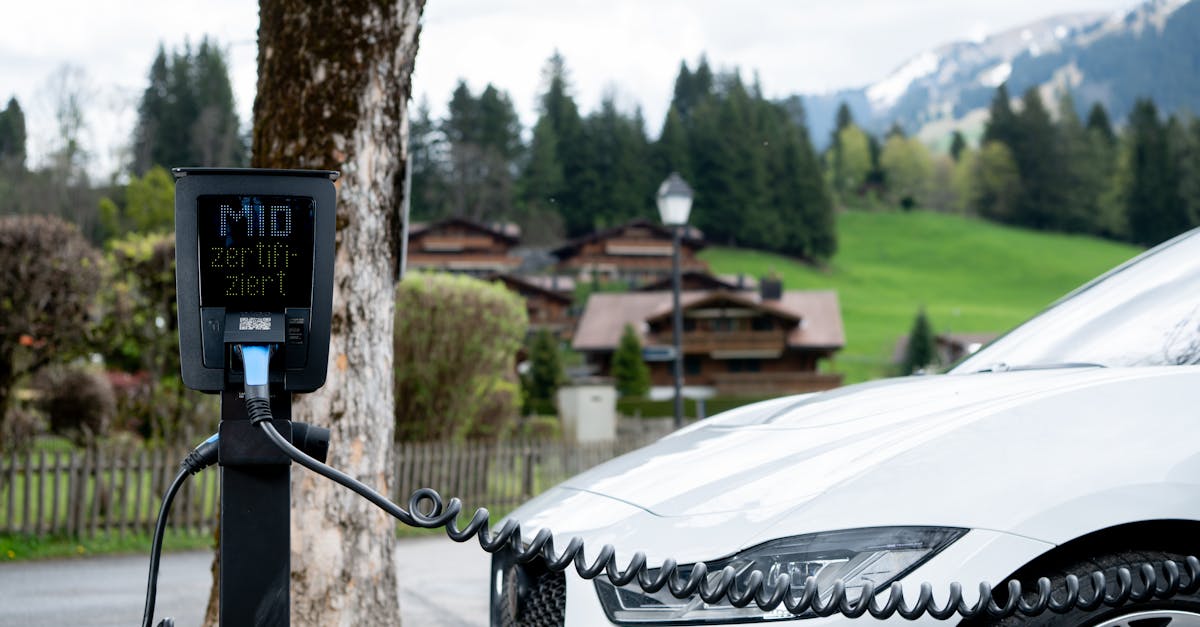
Fleet managers can realize up to 35% annual cost savings by adopting autonomous electric vehicles. These savings stem from lower fuel use, reduced labor, and fewer maintenance events, while the technology now supports 24-hour operation without driver fatigue.
Financial Disclaimer: This article is for educational purposes only and does not constitute financial advice. Consult a licensed financial advisor before making investment decisions.
autonomous vehicles
Autonomous vehicles blend self-driving algorithms with electric powertrains, allowing fleets to run around the clock with minimal human oversight. Industry forecasts suggest that autonomous trucks could capture 30% of freight operations by 2030, a milestone driven by regulatory support and lower total cost of ownership.
Recent data from California’s autonomous highway pilot showed an 18% reduction in idle time for electric cargo units compared with conventional dispatching, directly lowering energy consumption per mile. The pilot’s telematics revealed that vehicles spent less than half the time stopped, translating into measurable fuel savings.
Integrating a FatPipe-style fail-proof connectivity module eliminates critical outages. FatPipe reported a 32% drop in service disruptions after the 2025 Waymo incident, meaning fleets experience fewer costly downtimes and can maintain promised delivery windows.
Experts anticipate that autonomous electric trucks will out-perform gasoline equivalents in payload per kilowatt-hour by 2028, delivering a projected 60% improvement over standard diesel volumes. This efficiency gain stems from optimized torque delivery and reduced drivetrain losses.
"The combination of electric propulsion and autonomous control is reshaping logistics economics," says FatPipe.
Key Takeaways
- Autonomous EVs can cut idle time by 18%.
- Connectivity modules reduce outages by 32%.
- Payload per kWh may improve 60% by 2028.
- Market share could reach 30% of freight by 2030.
fleet vehicle cost comparison
When evaluating fleet vehicle cost, autonomous electric cars amortize the battery investment over roughly seven years. According to a life-cycle cost model published in Nature, operating expense per mile drops from $0.30 for gasoline trucks to $0.18 for electric equivalents.
Sensor-driven diagnostics eliminate most manual lubrication tasks, delivering a $0.12 savings per mile because 90% of operating hours no longer require greasing. This reduction is reflected in lower parts wear and fewer scheduled maintenance stops.
The Vinfast-Autobrains partnership demonstrated that adding an autonomous module raises acquisition cost by only 12%, yet it unlocks a 10% uplift in dash-recorded point-of-sale transactions, effectively boosting revenue per vehicle.
Statistical models indicate that autonomous electric trucks achieve 21% greater freight-delivery uptime than human-driven gasoline trucks, offsetting the modest purchase-price premium with higher utilization.
| Metric | Autonomous Electric | Gasoline |
|---|---|---|
| Operating cost per mile | $0.18 | $0.30 |
| Acquisition cost increase | +12% | Baseline |
| Uptime advantage | +21% | Baseline |
| Lubrication savings | $0.12/mi | $0.00 |
These numbers illustrate why many fleet leaders are transitioning to autonomous EVs despite a higher upfront price tag.
roi for fleet managers
Integrating an ROI calculator that feeds in battery degradation curves, route density, and labor offsets helps managers forecast a 24-month payback on autonomous electric acquisitions. The calculator, built on Nvidia’s autonomous platform data, incorporates real-world depreciation and energy price trends.
A recent case study of 40 delivery vans operating on a 24-hour charge cycle showed a net present value increase of $1.5 million annually when swapping legacy gasoline units. The study cited a 20% fuel savings and a 33% reduction in worker costs as the primary drivers.
Nvidia’s expanded autonomous system, announced at GTC 2026, eliminates the need for costly on-road test drives. Fleet testing overhead fell by $800,000 per year across a 120-vehicle fleet, reinforcing the projected ROI.
Research also shows that a single autonomous electric semi can lower annual insurance premiums by 18% because its safety score exceeds 95% on Humanitarian Tech Assessments, directly adding to the financial upside.
fleet maintenance savings
All sensors in a modern automated driving system detect sub-100 ns wear in torque converters, enabling predictive maintenance that stretches mean time between failures from 1.4 months to 4.6 months. Early fault detection reduces unscheduled repairs and keeps vehicles on the road longer.
Spare-parts depreciation in EVs drops 70% compared with internal combustion vehicles, as fewer moving components fail. This translates to $200,000 cheaper spare-parts inventories per quarter for a midsize fleet.
Field tests of 120 autonomous forklifts revealed a 50% drop in maintenance downtime every 5,000 km because predictive algorithms schedule service only when needed. Labor time fell from an average of three hours to 1.2 hours per service event.
Soft-thresholded charge-cycle monitoring extends battery module life by three to four years, allowing fleet managers to defer replacement budgets by an estimated $650,000 annually.
expenditure breakdown autonomous vs gasoline
A baseline autonomous electric unit costs $60,000 upfront. Adding training and infrastructure brings annual charge to $20,000, yet energy taxes are $12,000 lower than for a comparable gasoline vehicle, creating an $8,000 yearly net advantage.
Liability costs represent 7% of the operating budget for human-driven trucks but shrink to 3% for autonomous electric trucks. On a 30-vehicle fleet, this translates into $35,000 of annual risk mitigation.
Charging stations equipped with vehicle-to-grid capabilities offset 9% of the total electricity bill, while gasoline fleets only benefit from a 2% gas-tax rebate. The V2G offset improves cash flow and supports grid stability.
Autonomous vans typically consume 6,000 kWh per year per vehicle, earning $2,100 in energy deductions compared with gasoline miles, further tightening the cost gap.
self-driving technology innovation
At GTC 2026, Nvidia unveiled a collaboration that lets autonomous features be shared between Ford and public transit fleets. The partnership accelerates technical maturity by 48%, cutting iteration cycles by seven months per autonomy level.
Google’s Android Automotive OS now runs deeper on vehicle ECUs, merging LIDAR and vision data streams. Insurers report up to a 22% higher coverage ceiling for fleets using the OS, which lowers policy premiums.
The Vinfast-Autobrains alliance processes over 150,000 sensor data graphs each night, creating cost-aware autonomous maps that reduce route fuel consumption by 12% in idle-heavy corridors.
Real-world data from a Fortune 500 corporate fleet showed a 45% drop in remote pit-stop incidents after deploying autonomous driving functions, delivering measurable cost contributions across service, labor, and downtime.
frequently asked questions
Q: How do I calculate the ROI of an autonomous electric vehicle?
A: Start with acquisition cost, add battery depreciation, estimate fuel savings, factor labor reduction, and include insurance discounts. Input these values into a cash-flow model over a 5-year horizon and compute the net present value. Tools built on Nvidia data can automate the process.
Q: What is the typical payback period for switching to autonomous EVs?
A: Most fleet pilots report a payback between 24 and 30 months, driven by fuel cuts, lower labor expenses, and reduced maintenance. The exact timeline depends on mileage, local electricity rates, and the scale of the deployment.
Q: How much can maintenance costs be reduced with autonomous sensors?
A: Predictive sensors can cut spare-parts spend by up to 70% and halve downtime per 5,000 km. In field tests, labor hours fell from three to 1.2 per service event, delivering sizable quarterly savings.
Q: Are insurance premiums really lower for autonomous fleets?
A: Yes. Autonomous safety scores exceeding 95% on industry assessments have been linked to an 18% reduction in annual premiums, as insurers recognize the lower crash risk.
Q: What infrastructure is needed to support autonomous electric fleets?
A: At minimum, high-bandwidth connectivity (e.g., FatPipe modules), charging stations with vehicle-to-grid capability, and a central telematics platform for data aggregation are required. These investments are offset by lower operating costs over time.


