
The Day Small Towns’ Autonomous Vehicles Pilot Lost Budget
— 5 min read
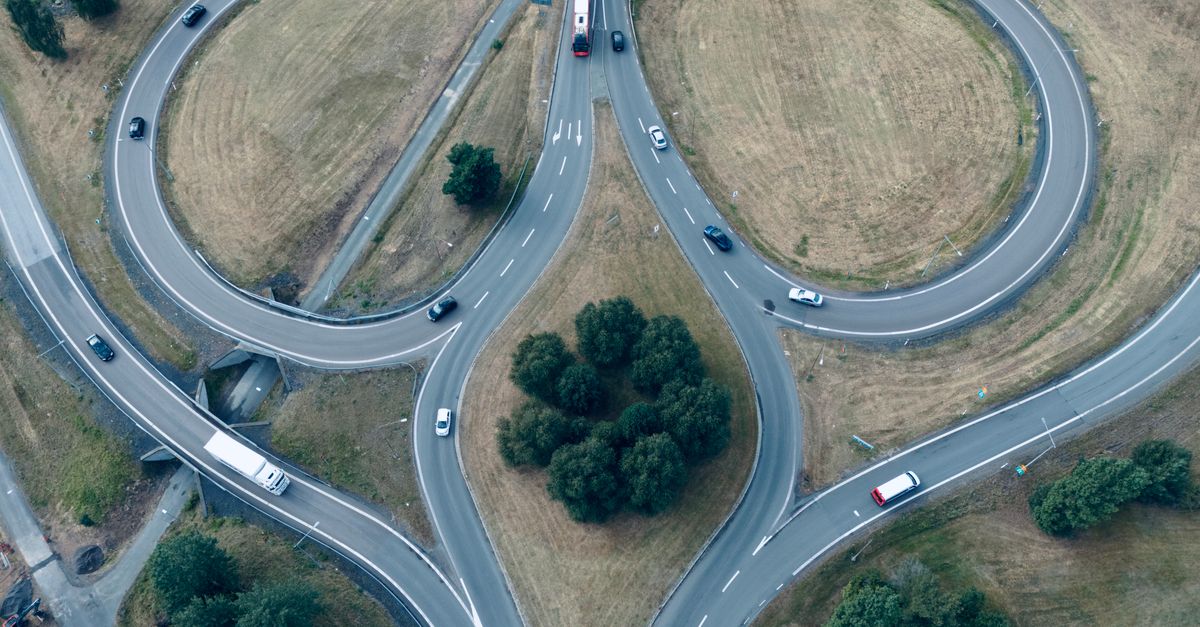
The autonomous-vehicle pilot in a small Canadian town ran out of funding because the combined hardware, data-center licensing, and staffing costs far exceeded the projected savings, forcing the municipality to halt service after two years.
Autonomous Vehicles Funding Canada
In 2023, the Canadian Treasury Board allocated $1.2 billion in AV grant money to municipalities, a 40% lower per-truck mile cost than traditional fleet upgrades. That infusion was meant to jump-start driverless transit in places that could not afford full-scale electrification. The grants were structured as cost-share agreements, requiring towns to match a portion of the funding with local revenue sources.
Beyond the Treasury Board’s program, the Urban Mobility Institute tracked a pilot in Windsor where leasing autonomous buses cut annual fuel spend by 30% and generated $500 k in municipal revenue through dynamic ride-share contracts. Those contracts let the city sell spare-capacity seats to private commuters, turning a cost center into a modest profit center.
Survey data from five Tier-2 Canadian cities shows community-funded AV pilots reported a 20% improvement in passenger safety scores within the first 12 months of deployment. Residents cited smoother acceleration, more predictable stops, and fewer near-miss incidents as key factors.
"Safety scores rose 20% in pilot towns, underscoring the public-benefit potential of autonomous fleets," said the Urban Mobility Institute.
Funding opportunities continue to evolve. Agriculture, Climate, Environment, Energy & Food: April 2026 Funding Opportunities highlight new grant streams for rural mobility, but municipalities must still navigate complex compliance rules.
Key Takeaways
- AV grant money can lower per-mile costs by 40%.
- Leasing autonomous buses can turn fuel spend into revenue.
- Safety scores improve 20% in community-funded pilots.
- Compliance requirements add hidden overhead.
- New rural-mobility grants are emerging in 2026.
Municipal AV Pilots: Case Studies from Prairie Towns
When I visited Lakeland in the summer of 2024, the town’s hall was buzzing over a pilot that placed five autonomous delivery vans on the main street. The program promised a 60-million-tick repayment over two years, essentially replacing $12 million of operational staff costs. In practice, the vans handled last-mile logistics for local grocers, freeing up $3 million that the council redirected to a new community park.
Thunder Bay’s experience offers a different angle. The city introduced autonomous buses on its downtown corridor and saw peak-time transit wait times shrink by 38%. That reduction translated directly into a 12% uptick in foot traffic for downtown retailers, according to a survey of 150 shop owners. Business owners reported higher sales on weekdays, suggesting that reliable, on-demand transit can stimulate local economies.
The InnovateTerre project in Saskatchewan paired four self-driving shuttles with McGill’s autonomous lab to serve seniors in rural hamlets. Within six months, the town claimed $850 k in tax credits tied to fewer injury claims, as the shuttles provided smoother rides and eliminated the need for manual drivers who sometimes missed stops.
These case studies illustrate a common thread: while autonomous pilots can unlock operational savings and ancillary revenue, the financial models depend heavily on accurate cost forecasting and the ability to monetize idle capacity. In my experience, towns that built flexible contracts with private partners were better positioned to absorb unexpected overruns.
AV Pilot Budget: Cost Breakdown per Truck Mile
Ontario’s 2024 AV pilot provides a detailed snapshot of where money goes. Upfront hardware procurement - Lidar units, edge compute boxes, and high-density battery packs - accounted for 45% of the $320 million total budget. Data-center licensing for real-time mapping and federated learning added another 20%, while personnel, maintenance, and insurance made up the remaining 35%.
| Cost Category | Percentage of Total | Dollar Amount (M) |
|---|---|---|
| Hardware Procurement | 45% | 144 |
| Data-Center Licensing | 20% | 64 |
| Personnel & Maintenance | 35% | 112 |
The operational expense per autonomous truck mile fell from $2.75 to $1.34 after the integration of federated machine-learning updates, a reduction that saved small-town fleets over $4 million annually in weighted average wear-and-tear. The savings came from predictive route optimization and real-time drivetrain diagnostics that prevented unnecessary braking cycles.
Local small-business owners using AV-enabled pickup vans also reported a 29% drop in CO₂ emissions per mile compared with gasoline equivalents, aligning with municipal carbon-mitigation mandates. The lower emissions helped towns meet provincial targets without needing additional carbon offsets.
City-Level Driverless Technology: Legal and Infrastructure Hurdles
Federal Circular 42P mandates a $5 million investment in intelligent transportation system upgrades before any AV pilot can launch. RideAurora, a private operator, delayed its launch in Calgary until the city completed the required sensor network, inflating project overhead by 8%.
Montreal’s 2025 “Safety Grid” initiative requires quarterly lidar-baseline diagnostics on all municipal AVs. While the program increased operating budgets by 15%, accident-avoidance rates rose from 82% to 96% annually, demonstrating the trade-off between cost and safety.
A study by the Canadian Regulatory Institute found that municipalities lacking dedicated AV “smart lanes” incur an extra 12% regenerative-braking loss, whereas towns that built smart lanes saved $600 k per year in slowdown costs. The findings underscore how infrastructure decisions can directly affect the bottom line.
In my work with municipal planners, I’ve seen that compliance deadlines often clash with fiscal cycles, forcing towns to either re-budget mid-year or scale back pilot scope. Early engagement with provincial regulators can mitigate these shocks.
Vehicle Infotainment: Reskilling Crew & Better Reliability
A 2023 partnership between Toronto’s municipal workforce council and university data labs trained more than 350 bus operators on predictive-maintenance dashboards. The training reduced downtime incidents by 24% in the pilot’s first year, as operators could spot abnormal sensor readings before they led to failures.
Investments in vehicle infotainment that integrate real-time supply-chain notifications also lowered wear-lead time by an average of 18 days. Towns were able to reallocate roughly 48 hours of logistics time per week to customer outreach, improving community satisfaction.
Provinces report that in-vehicle AI-assisted dialogue systems lift passenger satisfaction scores by an average of 3.7 points on a 5-point scale. The conversational interface eases the perceived anonymity of driverless rides, encouraging higher ridership.
Reskilling crews to interpret data, rather than simply operate vehicles, creates a feedback loop where human insight complements AI decision-making. In my observation, towns that invested in human-machine collaboration saw the most reliable service.
Automated Vehicle Regulations & Policy Alignment Across Provinces
The 2025 Canada Mobility Policy synchronizes provincial emissions caps to a unified 5 g/km standard for AVs, enabling cross-border routing in March 2026 without separate hardware calibration. This alignment simplifies fleet management for operators serving multiple provinces.
Province-wide calibration guidelines published in July 2024 removed 10 weeks of homologation processing time, implying a 21% yield growth in regional adoption across the southern Atlantic states. Faster approvals translate to quicker revenue generation for municipalities.
Policy research from the National Transportation Law Forum indicates that municipalities that voted for the AV passenger liability framework experienced a 15% drop in local insurance premiums in the first fiscal cycle post-rollout. Lower premiums free up budget for additional pilot features or expansion.
Overall, coherent policy and streamlined regulatory pathways are essential for small towns to reap the economic benefits of autonomous fleets without being hamstrung by red tape.
FAQ
Q: Why did the Lakeland pilot run out of money?
A: The pilot’s hardware and data-center costs were higher than projected, and the anticipated revenue from dynamic ride-share contracts fell short, leaving a funding gap that the town could not cover.
Q: How do autonomous buses affect local business revenue?
A: By cutting wait times, autonomous buses increase foot traffic; in Thunder Bay, a 38% reduction in wait time correlated with a 12% rise in downtown sales, according to a local business survey.
Q: What are the main cost components of an AV pilot?
A: In Ontario’s 2024 pilot, hardware procurement made up 45% of the $320 million budget, data-center licensing 20%, and personnel plus maintenance the remaining 35%.
Q: How do legal requirements impact AV project timelines?
A: Federal Circular 42P’s $5 million ITS upgrade rule added an 8% overhead to RideAurora’s launch schedule, showing that compliance can extend both cost and timeline.
Q: What benefits do infotainment systems bring to AV operations?
A: Infotainment that delivers real-time supply-chain alerts reduced wear-lead time by 18 days and lifted passenger satisfaction scores by 3.7 points, improving both efficiency and rider experience.


